
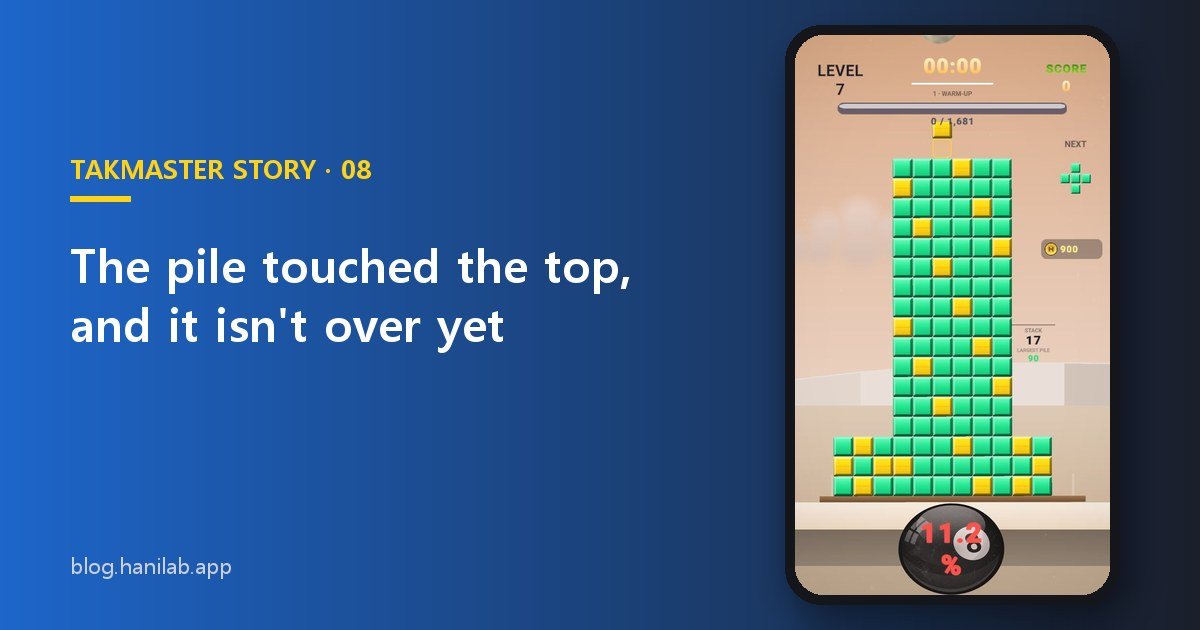

The pile touched the top,
and it still isn’t over
The middle columns have shot up to the very top of the screen. The spot where the next piece appears is blocked, and the remaining-strength number is flashing red. But in TakMaster the ceiling isn’t “where the pile reaches” — it’s “where a piece sets”. Where does the game really end? Why does a piece fit lying down but overflow standing up? What about the pieces that leave holes, and the moment those holes get filled? This is the story of the TakMaster ceiling.

This is the story of the TakMaster ceiling: the height of the board and the exact condition for game over, the gauge that reads your stack height, how to slide a piece aside when the middle is blocked, how the starting pile is laid down, and the holes left by split pairs, U shapes and crosses — plus the rule that fills a hole with a single line clear. All of it checked in the real game.
 STACK 17 — one row below the 18-row board. The ghost of the standing piece is already hanging above the ceiling
The ceiling is the top edge of row eighteen
The board is 12 columns × 18 rows. A new piece starts near the top of the board (the second row from the top), and if a box is already there it gets pushed up one cell at a time (up to four times) until it finds an empty start. Space above the ceiling counts as empty, so a piece can move left and right and rotate out there in thin air.
- Game over — if even one cell of a piece is outside the 18 rows at the moment it sets, it’s over. The screen shows GAME OVER with H300 CONTINUE · RETRY.
- When a piece sets — 0.6 seconds after it touches the floor (or the pile). Nudge it sideways in that window and the timer restarts (up to 12 times); a hard drop sets it instantly.
- So “there’s no room for the next piece” doesn’t end the game by itself. A piece always appears. The question is where it ends up sitting.
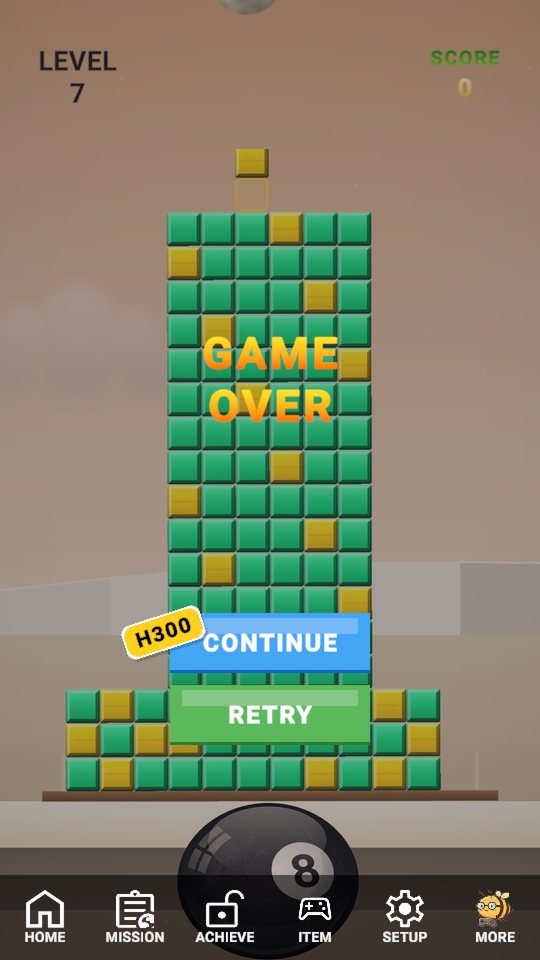 A standing piece dropped onto a pile 17 high — GAME OVER
A standing two-cell piece has its lower cell in row 18 and its upper cell in row 19, so it ends up outside the board. A two-cell piece lying flat has both cells in row 18 and fits.
The safe line, by piece height
On flat ground, a piece sets inside the board only if pile height ≤ 18 − piece height.
| Piece height | Which shapes | Pile height it can go on |
|---|---|---|
| 1 row | Single · flat two · flat three · flat split pair | up to 17 |
| 2 rows | Standing two · 2×2 · lying U | up to 16 |
| 3 rows | Standing three · standing split pair · L · cross · standing U | up to 15 |
It comes down to a single row, so once the pile reaches rows 15–17, look at the height of the next piece first. That’s exactly why the queue shows three pieces ahead.
Weight comes before the ceiling
Next to the pile sits a gauge with two numbers that rise together — STACK (rows from the floor to the top) and LARGEST PILE (the biggest group of connected same-material cells). The gauge follows the top of the pile up and down, so you can read it like a scale for how far you are from the ceiling. Here is the same board at different heights, with the remaining strength beside it (a billiard ball as the support, the middle six columns stacked mostly with rubber).

about 50% remaining

about 29% remaining
11.2% remaining
The pile is only 6 columns wide, yet at height 17 the remaining strength is down to 11%. On a normal board filled across all 12 columns, the support reaches its limit long before the pile touches the ceiling. So a ceiling game over comes from stacking narrow with light materials, or from building height in a way that never clears a row. It isn’t the weight that’s the problem — it’s the rows that won’t clear.
Blocked in the middle — slide it aside
A piece moves freely in the air above the ceiling. If the middle is blocked, drag it over to the lower side first and then drop it. The scene below is a pile 17 high with a well three rows deep at the right edge.


- A well (an empty one-cell-wide shaft) is your rescue line. It’s the only route that can still clear a row at the highest point. The starting pile leaves an empty shaft for the same reason.
- If the pile is full to the top row, make the last move a flat piece. A flat piece fits, but the next piece starts above the ceiling, so if it can’t clear a row you’re soon finished. Below is the result when the pile is 17 high and the next piece sets.
 Once the top row is full and the next piece sets — GAME OVER
The starting pile — the board is never empty
A new game doesn’t open on an empty board. A starting pile is laid down to match the level, so your room below the ceiling is already smaller before the first piece. There are three rules for how it’s laid down.
- It’s built as a skyline. Each column gets a height and is filled from the floor up. Punching holes would leave boxes floating and the screen would shake the moment you start.
- An empty column is always left. If a row were full, it would clear at the start and set off a combo you never played. That empty shaft is where your first move goes — and your way to fight back.
- There are two caps. Height can’t exceed one third of the board (6 rows), and the pressure on the support can’t exceed a per-level cap. If it does, boxes are removed from the top of the tallest column.


Level 10, right after level 9, plays like level 4 for the starting pile, so it’s much lighter (a target of 3.5 rows versus 6 — the real height is random, so this is one shot). The per-level numbers are tabulated in the earlier difficulty post. From about level 12 on, lead boxes are mixed into the bottom two rows at a 14% chance.
Pieces that leave holes
A piece comes down and sets as one block, and once it has set there is no gravity. Any empty cell or air gap created by the piece’s shape stays until something is cleared by a line or an explosion. Three shapes make holes.
The split pair — one half hangs in the air


A two-cell piece with a gap in the middle doesn’t send its cells down separately. It catches on the taller column first, and the other cell stops and hangs at that height. The standard play is to find two columns of the same height and straddle them.
U and cross — the inside gets trapped
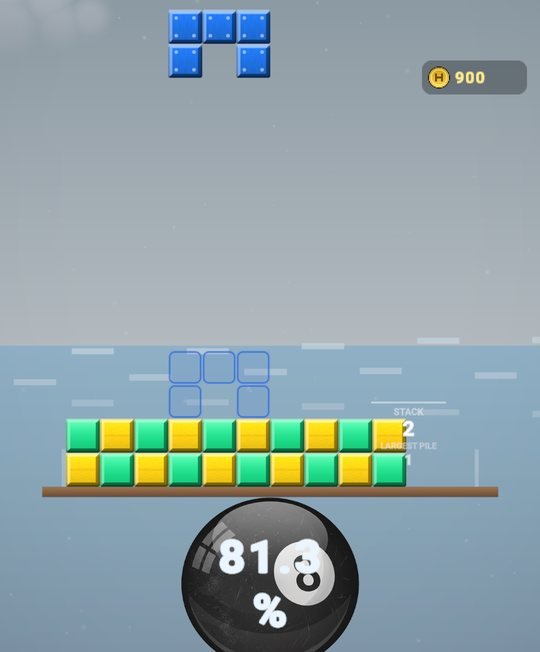

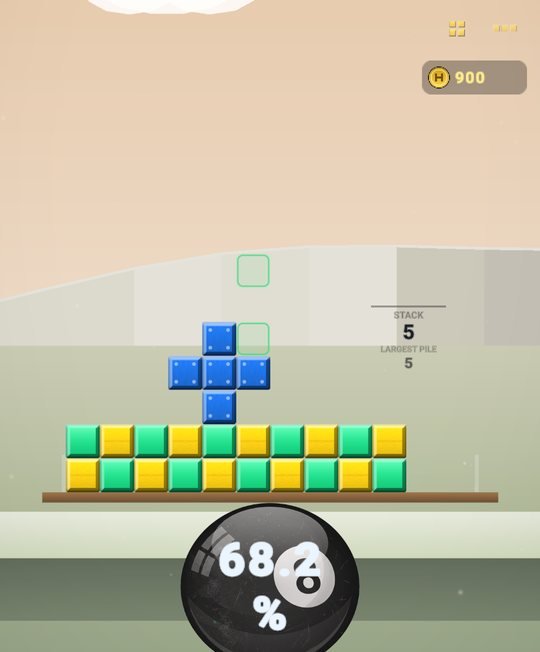
A U with its opening facing up fills a gap, but with the opening facing down the cell inside becomes a spot nothing can reach from above. The cross has a one-cell base, so on flat ground the two cells beneath its arms are empty. A hole doesn’t add weight (weight is the sum of the boxes), but it makes that row impossible to fill.
A hole is filled by one line above it
When a line clears, everything above drops one cell, and then every column falls to fill its empty cells. That means boxes resting over a hole fall into it. So a row with a hole in it gets filled by itself if you clear the line above it first.
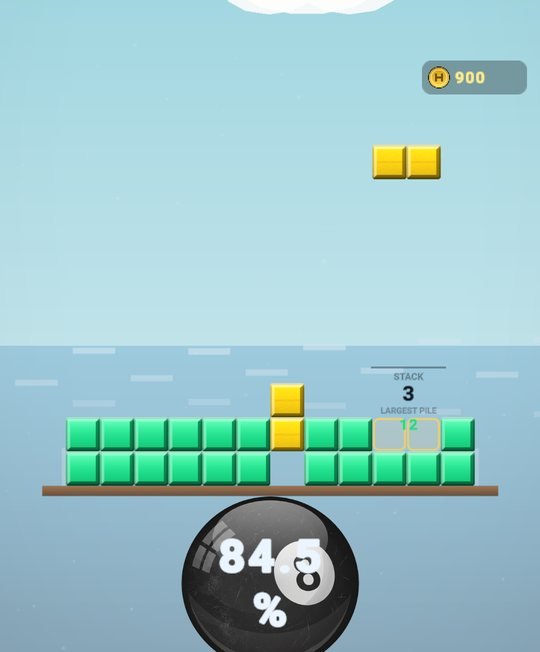

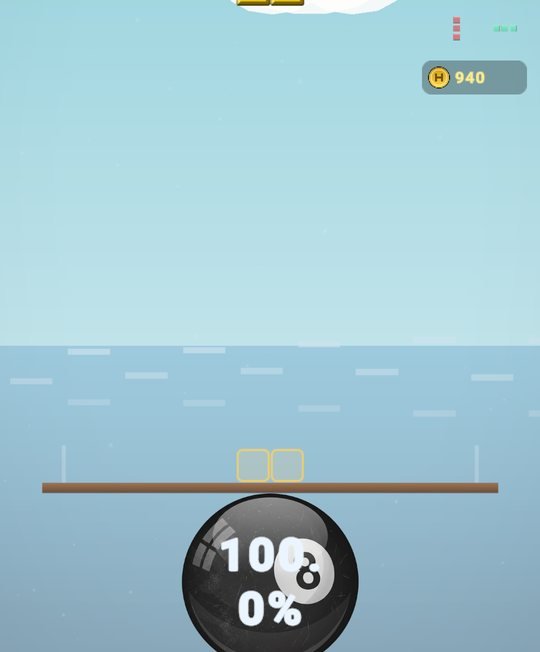
The boxes over the hole came down and completed the bottom row, and that row cleared right after. If a hole below is keeping you from finishing a line, clearing the line that covers the hole is the way through.
Six lines to keep at the ceiling
- The ceiling is judged by where a piece sets. Touching it isn’t the end; one cell setting outside the 18 rows is.
- From pile height 15, check the next piece’s height. A 1-row piece goes on up to 17, 2 rows up to 16, 3 rows up to 15.
- When blocked, slide aside above the ceiling. With a well you can clear a row even at the highest point.
- Always keep one empty shaft. The starting pile leaves an empty column for the same reason.
- Straddle a split pair over two equal columns; keep a flipped U and a cross off flat ground.
- Fill a hole by clearing the line above it. The line covering the hole goes first.
Next time we’ll look at what happens after the game ends — continuing and the results screen.
Even above the ceiling,
your hands keep moving.

Play TakMaster now
Playing it is much faster than reading about it.
Find the other Master Series games all in one place at hanilab.app.

More from this game
 TakMaster Continue Script: From a Red Base to the Clear, One Run Called Live
 TakMaster Difficulty — The Fall Speeds Up and the Same Box Gets Twice as Heavy as Time Goes By
 TakMaster Items: Line Clear, Material Swap, Quick Bomb and Magnet Pulse, Timing Is Skill
 TakMaster Weather — Rain and Snow Add Weight, Wind Pushes the Piece, Ink Hides the Numbers
🌌 Universe stories
 Roddy Universe, Part 2 — Fallen Down, Only One Step Back at the Roadside
 Roddy Universe, Part 1 — One Beat Before Crossing, the Empty Road Between the Cars
 Bombi Universe, Part 2 — Behind You: The Reaper That Walks Through Walls
Try other games
 BlockMaster
 SnakeMaster
 MathMaster