
TakMaster Trait Boxes — Lead, Cracked, Locked and Fickle: Same Material, Different Temperament

Same yellow box,
twice the weight
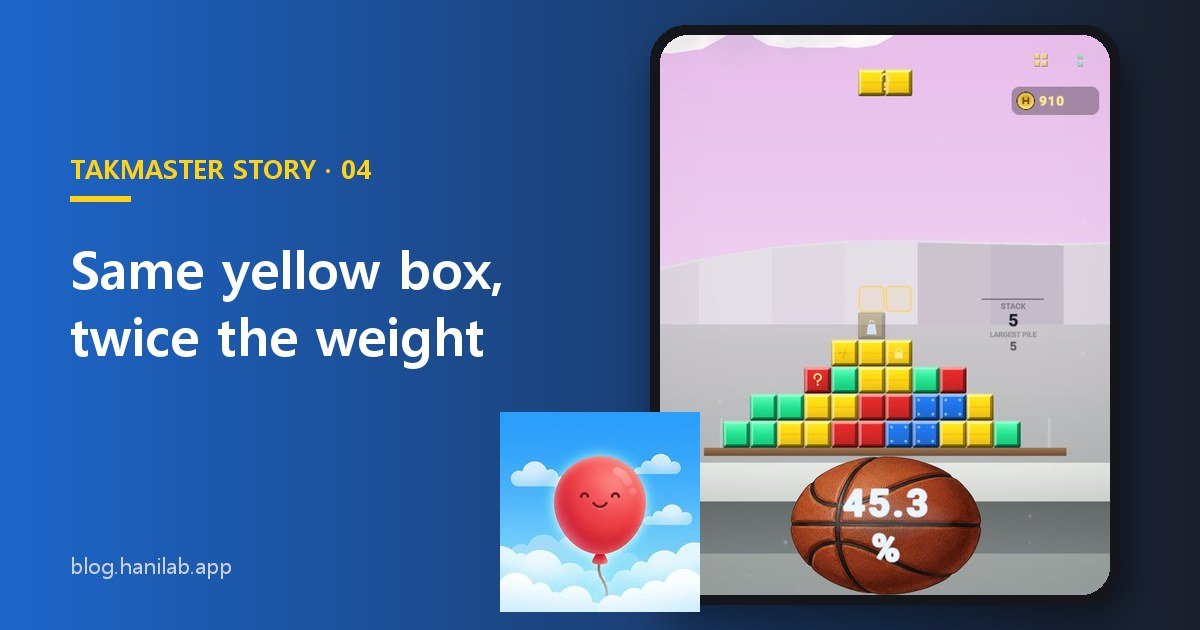
Play long enough and strange boxes start sliding into the stack. They are clearly wooden boxes, yet one carries a heavy weight icon, one is split by a crack, one is padlocked, and one has a flickering question mark. The material is the same — only the trait has changed. These are TakMaster trait boxes, the four late-game handicaps.

This post is about TakMaster trait boxes: when lead, cracked, locked and fickle boxes start to appear, how often, what each one changes on the board, and how to handle them — using real gameplay screens and the numbers in the code.
 Traits mixed into one stack — each has its own mark (lead weight, crack, padlock, question mark)
Why a ‘trait’ and not a new material
Add a fifth or sixth material and the odds of matching boxes drop so far that some boards have nothing big enough to blow up even when a bomb arrives. So new hazards are built as a trait layered on top of a material. Heavy wood is still wood, so the rule ‘gather the same material’ never wavers.
| Trait | In-game description | Share (start → max) |
|---|---|---|
| Lead | Same material, but weighs more than double. Clear it early. | 0% → 6% |
| Cracked | It survives one blast. Hit it again to break it. | 0% → 5% |
| Locked | Bombs do nothing. Only a full line clears it. | 0% → 4% |
| Fickle | Its material keeps changing. Do not build around it. | 0% → 2% |
- The share is measured among ordinary pieces, not item boxes. The longer a round runs (the maximum is reached at about 4:30 on the difficulty clock), the more the mix tilts from help towards hindrance.
- The whole piece carries the trait. If a five-cell U-piece is lead, every cell is lead.
- Item boxes never get a trait — if function and trait overlapped, nobody could read the board.
- A tip card pops up the first time each trait falls.


Lead — same cell count, twice the weight
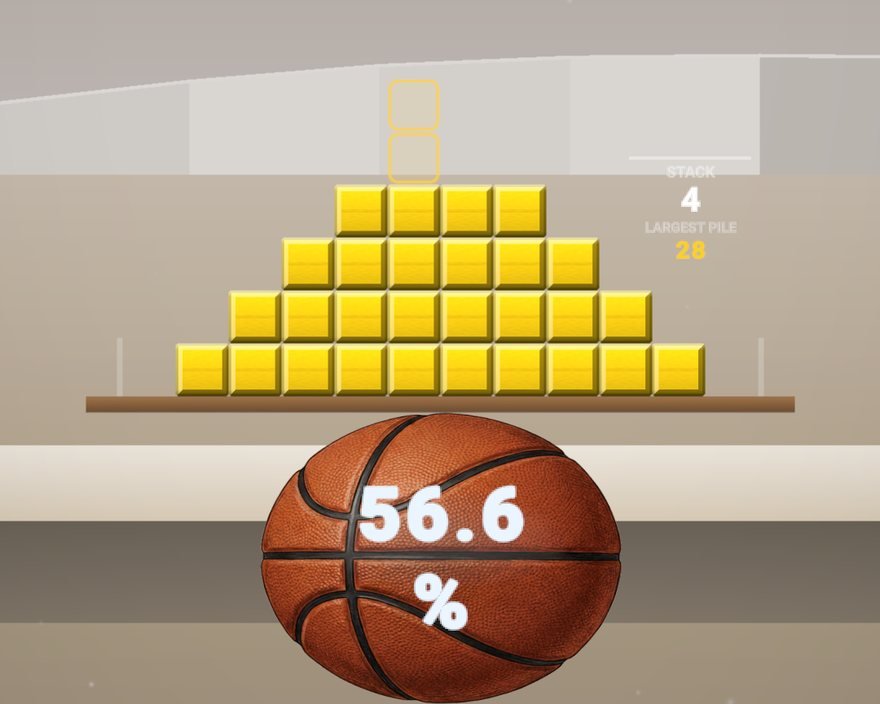

Same shape, same cell count; only the bottom two rows (18 cells) were swapped for lead, and the strength left fell from 56.6% to 23.1%. Lead weighs 2.2 times a cell of the same material — wood goes from 1.5 to 3.3, stone from 2.2 to 4.84. Rain adds another +0.55 on top.
- Clear lead first. When you pick a row to complete, choose the one with lead in it — the same effort removes nearly twice the weight.
- The bottom two rows of the starting pile can also contain lead (from level 12, at 14%). It is a sign the board is uneven from the very first second.
- Bombs blow lead up like anything else — a cluster of lead is actually the best target for a bomb.
Cracked — it takes two hits
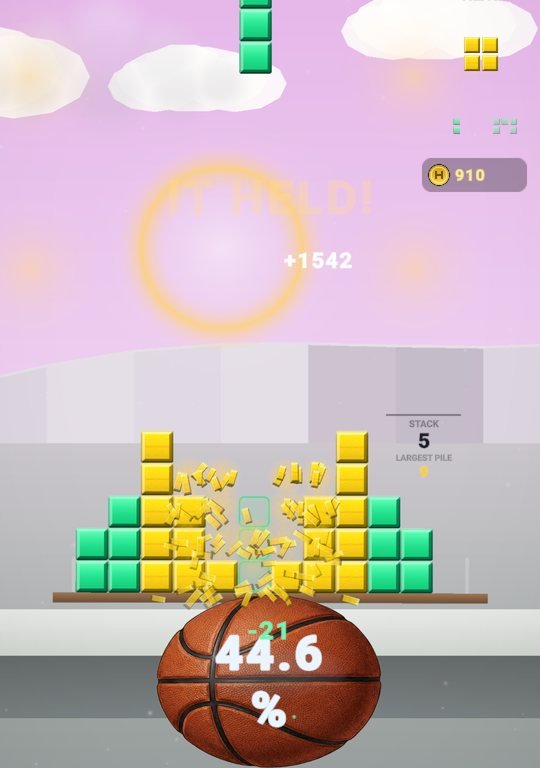
Even inside a bomb’s blast, a cracked box survives once. The IT HELD! banner appears, and the box stays behind as an ordinary box with the crack gone. It takes a second bomb on the same spot to remove it.
- Wait for the next bomb, or complete the row it sits in — a line clear and the drill both ignore the crack.
- When you use a bomb, count the cracked boxes inside its range. Plan on that many not disappearing this time.
Locked — only a line can open it
A locked box stays even inside a bomb’s blast. There is one more twist: when the game checks whether a bomb’s key has touched anything, a locked box does not count as ‘the same material’. If the only thing the bomb touches is one locked wooden box, it fizzles out. That rule exists so you never get a blast that blows up nothing.

So how do you get rid of one? Fill the row. A line clear takes the whole row, padlocks included.
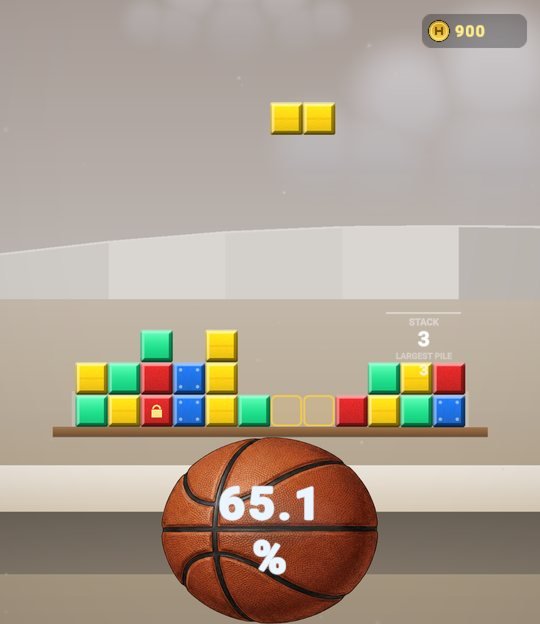
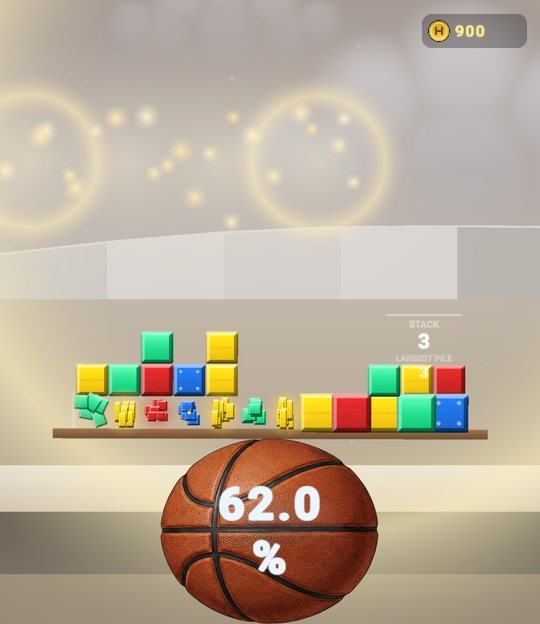

- The drill (material does not matter, it bores through padlocks) and the Continue rescue bomb (9×9) also remove locked boxes.
- Decide that a row with a locked box is a row you will complete, whatever it takes. Bombs cannot take it, so the line is practically the only way.
Fickle — a new face every 6 seconds


A fickle box changes to a different material every 6 seconds. It flashes and plays a sound at the moment of the switch — a change you did not notice would be betrayal, not a hazard. While the board is frozen (the shop is open, or the 3 · 2 · 1 countdown is running), its clock stops too.
- It is the only hazard that shakes up a group you have already gathered, so it is the rarest (2% at most).
- Put a fickle box in the middle of a cluster and six seconds later the cluster has a hole in it. Keep it on the edge, or complete its row right away.
Five lines to remember at a trait box
- See lead? Clear that row first. The same row sheds more than double the weight.
- A cracked box needs two bombs. The first one shows ‘IT HELD!’.
- Locked boxes open only to a line. They survive the blast, and they do not count as the bomb’s matching material.
- Fickle means 6 seconds. Never put it in the middle of a cluster.
- A trait never overlaps an item box. If a bomb is coming, that piece is plain.
The next story is not about boxes but about hazards from the sky — rain, snow, wind and ink.
Don’t trust looks.
Boxes have temperaments too.

Play TakMaster now
Playing it is much faster than reading about it.
Find the other Master Series games all in one place at hanilab.app.

More from this game
 TakMaster Continue Script: From a Red Base to the Clear, One Run Called Live
 TakMaster Ceiling — Where a Piece Sets Decides the End, and One Line Fills a Hole
 TakMaster Difficulty — The Fall Speeds Up and the Same Box Gets Twice as Heavy as Time Goes By
 TakMaster Items: Line Clear, Material Swap, Quick Bomb and Magnet Pulse, Timing Is Skill
🌌 Universe stories
 Roddy Universe, Part 2 — Fallen Down, Only One Step Back at the Roadside
 Roddy Universe, Part 1 — One Beat Before Crossing, the Empty Road Between the Cars
 Bombi Universe, Part 2 — Behind You: The Reaper That Walks Through Walls
Try other games
 SnakeMaster
 DalgonaMaster
 LineMaster


