

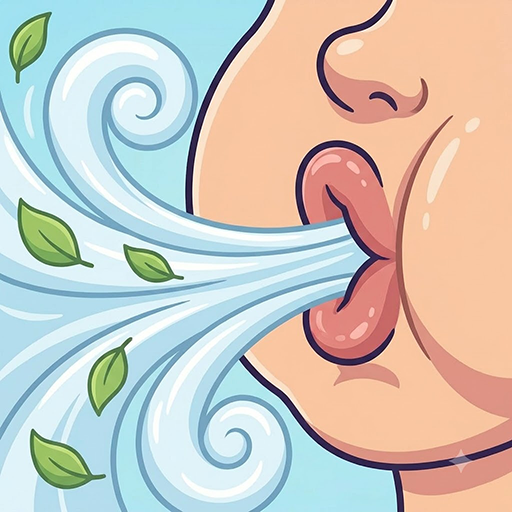
Blow “phoo~”
and flip the ddakji
This is the first chapter of the FlipMaster guide. You never slap the ddakji with a finger. You blow “phoo~” into your smartphone’s microphone, and the paper ddakji on the desk catches that breath — it lifts, slides and really flips over. Somewhere quiet? A finger drag that sweeps upward becomes the breath instead.

This FlipMaster guide covers everything: blowing with the mic, blowing with a drag, every number on the screen, why a ddakji flips, the mascot’s faces on a win and on game over, 12 ddakji and 10 everyday objects, weather, goal types, the help systems and the 6 items — only what is actually in the game. Every name and line comes from the game’s screens and source, and every picture is a real game screen.
- 30-second summary
- Blowing “phoo~” with your mouth — Mic mode (the star of the game)
- Blowing with a finger — Touch mode and turning the view
- The screen — what every number means
- How a ddakji flips — edge, corner, weight
- Win and game over — the faces tell you
- 12 ddakji and 10 objects
- Weather, desks and rooms
- Goal types — it’s not only flipping
- Help systems — guided stages, hints, help mode
- 6 items and H coins
- FAQ
30-second summary
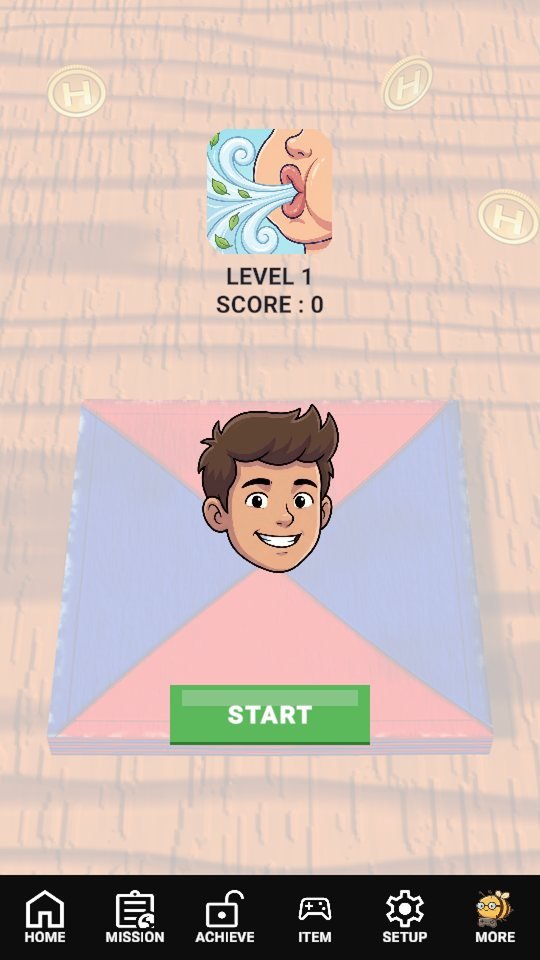 Start screen — a smiling face and the green START
How it goes
- Tap START. A fresh install is in Mic mode, and the game asks for microphone permission when the first stage starts.
- Hold the phone upright and give a short “phoo~” at the mic hole on its bottom edge. Too soft and nothing moves; too strong and the ddakji flies off the desk.
- No mic, or somewhere quiet? Switch to Touch mode — sweep upward in front of the ddakji and that is your breath. A faster, longer drag blows harder.
- When the ddakji comes to rest flipped over, you clear the stage. Run out of breaths (hearts) and it’s game over.
- Drag sideways to swing the view around the desk — that’s how you choose which side (edge or corner) the wind enters.
Blowing “phoo~” — Mic mode
The star of FlipMaster is your breath. The loudness the mic hears becomes wind strength, and that wind slips under the edge of the ddakji and lifts it. On the very first stage in Mic mode, the game puts a big line on screen — Blow into the mic in your language — and underneath it replays a side-view face blowing “phoo~” at the bottom end of an upright phone, again and again until you blow.
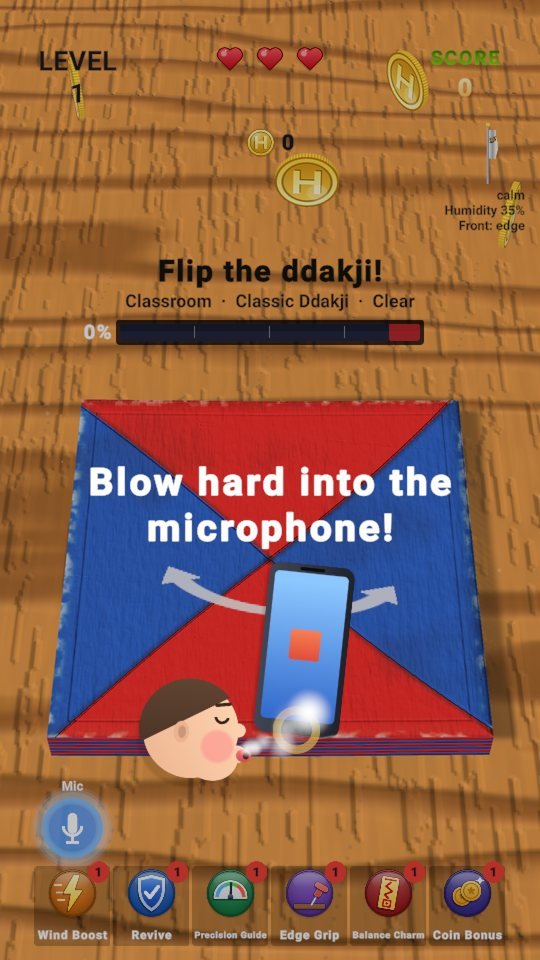


Tips for blowing into the mic
A “pah~” or “phoo~” is enough. The game accepts a single breath for 3 seconds at most, and a clap or a click doesn’t count as a breath.
The strength bar reads Soft · Good · Strong, and its end is a red band, Too much! Blow to the very end and the ddakji flies away.
The game lowers its own wind sound so it can’t be mistaken for your breath. If the room is loud it tells you: It’s noisy here. Touch mode is recommended.
Permission is asked when the first stage starts, not when you open the app. If you refuse, or there is no mic, the game says Mic unavailable — switched to touch and carries on in Touch mode, so you can always finish. Tap the mic button later to be asked again; if the system has blocked it for good, a window sends you to the app settings. The game only measures loudness and throws the sound away — nothing is recorded, stored, sent or played back.
Blowing with a finger — Touch mode and turning the view
You can blow with a finger drag instead of your mouth. The button at the bottom left (Touch / Mic) switches between the two modes. The first Touch-mode hint reads Drag up from below the ddakji, and a starting ring with a guide arrow growing upward appears in front of the ddakji.
 While you drag, the strength bar (top) fills and the front edge lifts
How a drag becomes a breath
- Faster = stronger — the speed of your finger across the desk sets the strength.
- Longer = longer breath — the breath lasts while your finger moves, and keeps going 0.15–0.6 s after you let go.
- Direction = your finger’s direction — within 35° left or right of the way you’re looking.
- Stop moving and the breath stops — a “phoo~” is one short stream.
- The end of the gauge is too much wind — a hard flick is not the answer.
Drag sideways to swing the view
The first direction you move decides the action. Up = wind, sideways = swing the view around the ddakji. The wind follows the view (in Touch it follows your drag, in Mic it follows where you look). Because that is how you pick the side — edge, corner or curled side — the wind enters, turn the view first when it won’t flip. The in-game hint says the same: Drag sideways to turn the view, then drag up from the side you want.
 After dragging sideways — the ddakji is seen from another angle
On Flip it against the headwind! a strong wind blows straight at you and the view is locked. Try to turn it and the game says Headwind stage — the view can’t be turned.
The screen — what every number means
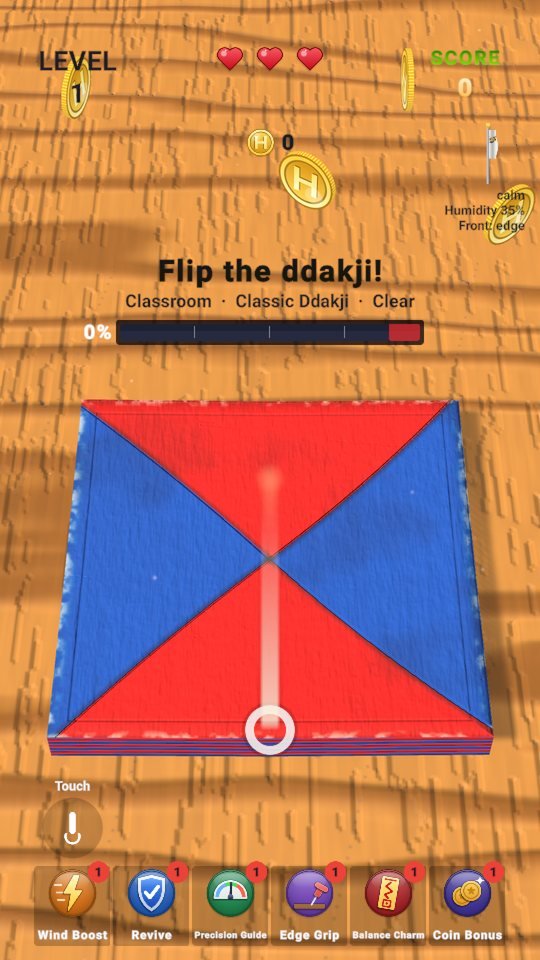
- Hearts — the red hearts at top center. One breath (attempt) is one heart. The early stages have 3.
- Score and H-coin wallet — SCORE at top right and the H-coin count at top center. H coins spinning on the desk fly to the wallet when the ddakji covers or sweeps over them (+2 each).
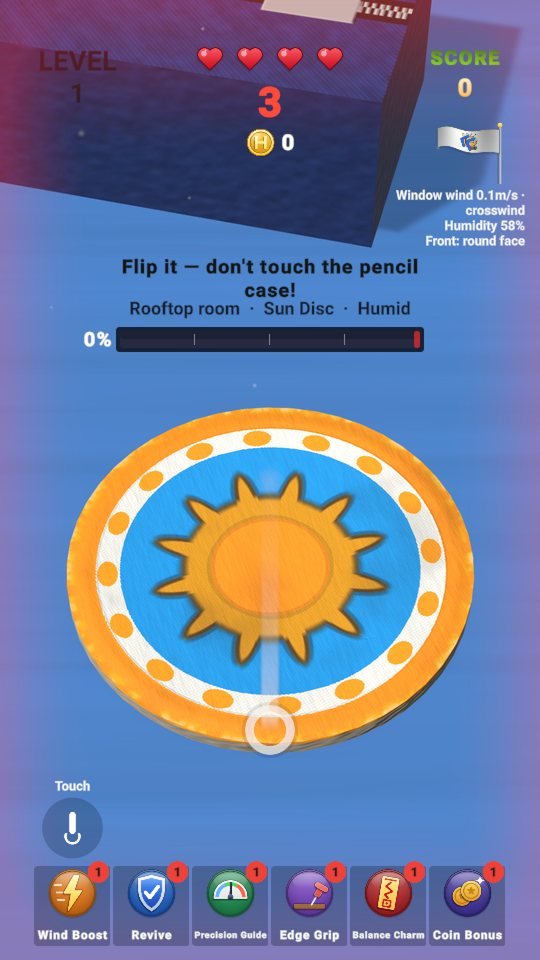
- Wind flag and three weather lines — top right: wind direction, humidity and Front: which part (edge, corner, angled N°) faces the wind.
- Goal — the big Flip the ddakji!, and under it room · ddakji name · weather.
- Strength bar — fills as you blow or drag. Percent on the left, Soft / Good / Strong on the right, and the red band at the end is Too much!
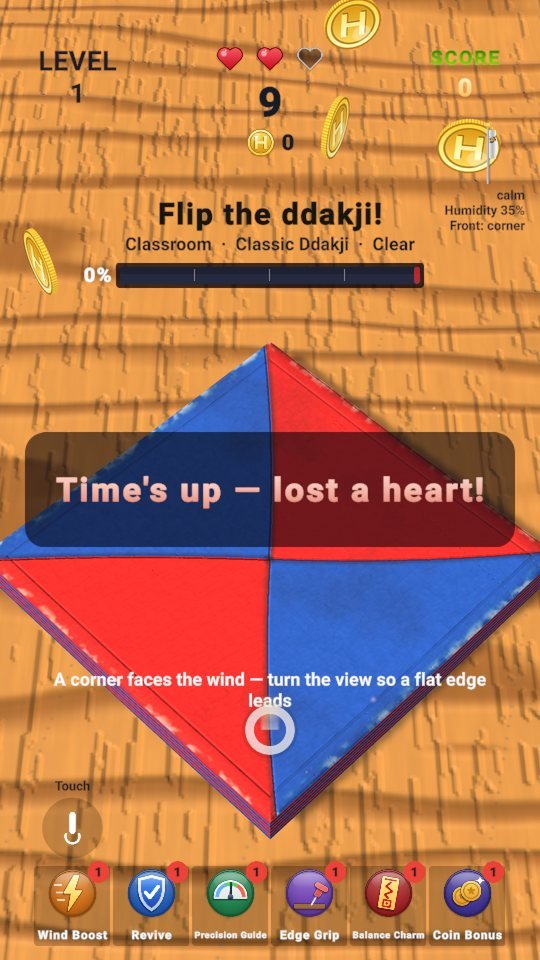
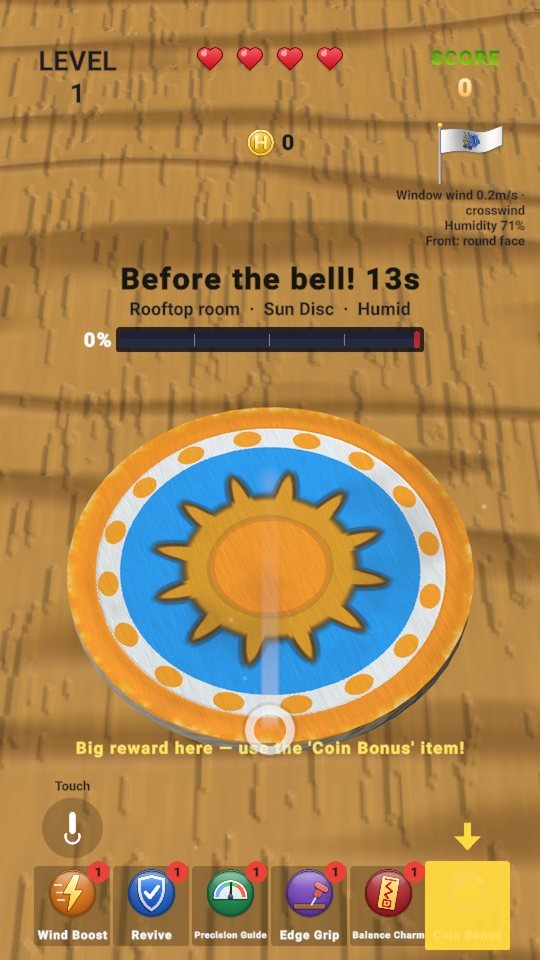
- Breath timer — 10 seconds while you wait to blow. The big number counts down, and from 4 s the screen edges pulse red. At 0 you lose a heart: Time’s up — lost a heart!
- Starting ring — the white ring in front of the ddakji. Drag up from here.
- Mode button — bottom left, Touch / Mic.
- Six item slots — along the bottom, with names and a red count badge. Tap one to use it or buy it (chapter 11).
How a ddakji flips — edge, corner, weight
A ddakji is an object with real size and weight (the basic square one is 8.8 cm and 7.5 g), and the wind pushes on dozens of points across its face separately. So there is no canned flip. The same strength gives different results depending on where you blew from.
When a flat edge faces the wind, air gets under it and the front lifts. The game shows Front: edge.
A corner splits the wind, so it lifts less. The hint says A corner in front splits the wind — turn the view so an edge faces you.
The curled side has a gap the wind slips into. Heavy ddakji need more breath, light ones a gentle puff.

Win and game over — the faces tell you
When a stage ends, the mascot Puu‘s face tells you the result. The verdict comes after the ddakji stops (it has to sit still for about 0.6 s).
The blowing face — between levels
On the way to the next level, Puu ① gets startled, ② strains, ③ puffs out both cheeks, and ④ blows “phoo~” (about 2.45 s). The level number pops out of that mouth.

Win — the smiling Puu
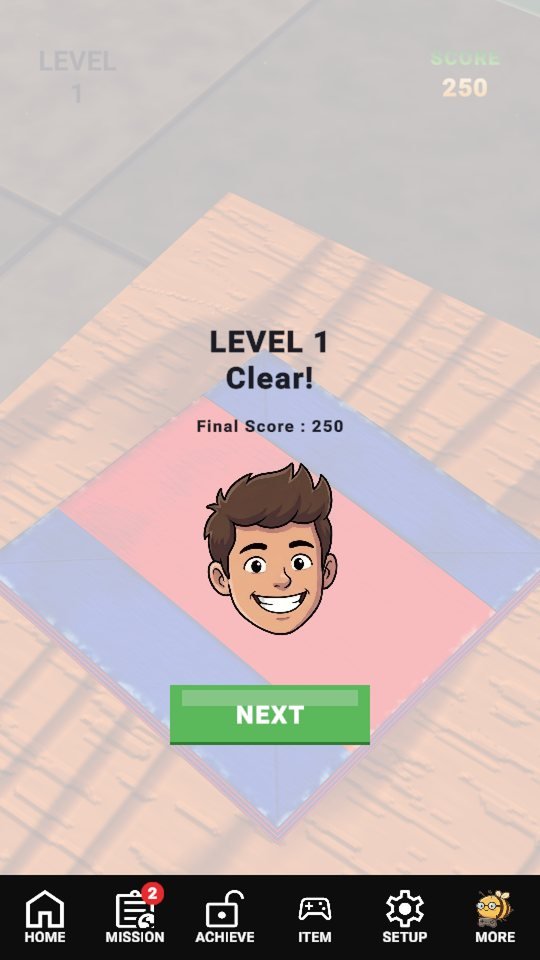 LEVEL Clear! — final score and NEXT

Flip it and stars burst; on the clear screen Puu grins wider and wider. Stars: flip it in one breath for ★3, two breaths ★2, after that ★1, and a win after continuing is ★1. Your first clear of a stage also pays coins (First clear +N).
Lose — the crying Puu
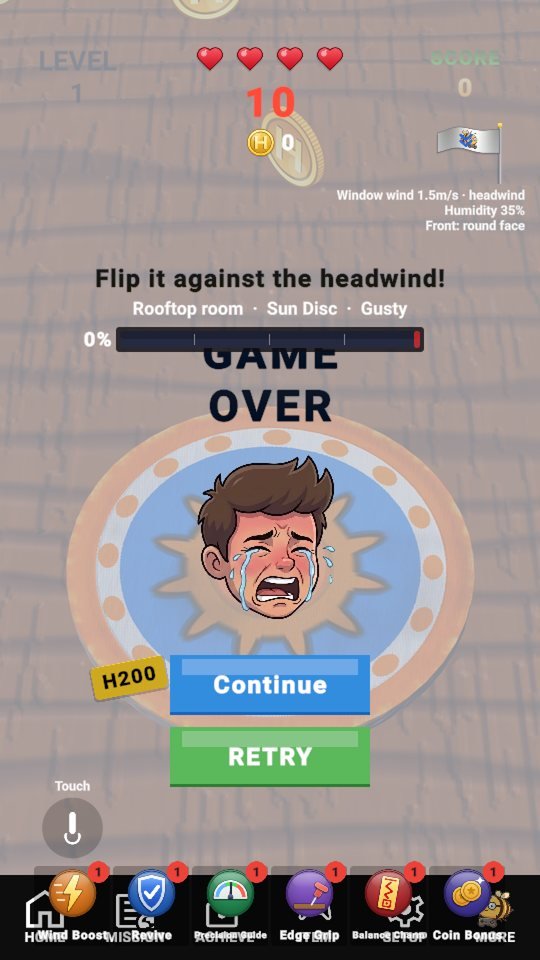
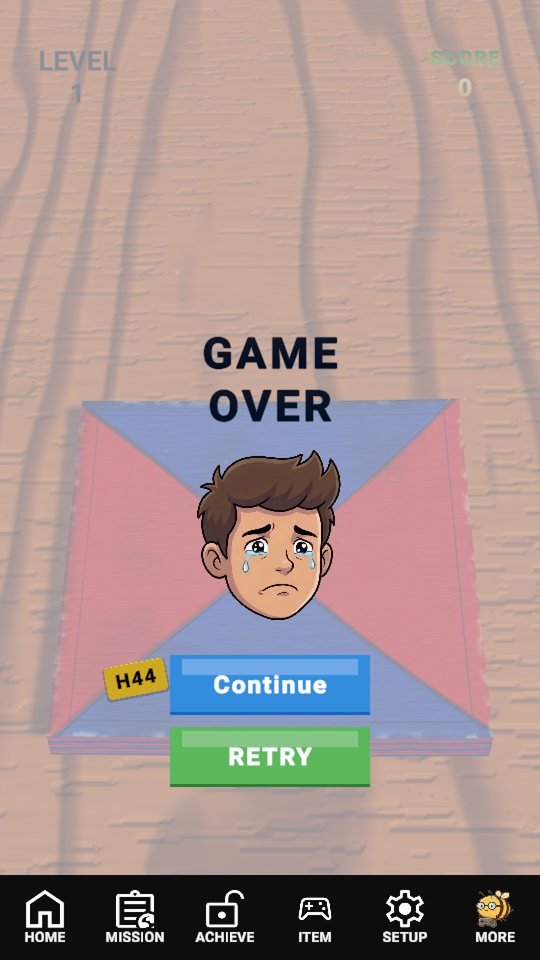 GAME OVER — Continue (H coins) · RETRY

Game over only happens at 0 hearts. Flying off the desk, running out of time, touching a neighbor ddakji — each costs one heart and the ddakji goes back to its start. A lost heart bursts with a pop and a boing. On your last heart the game says Last breath!
On game over you choose Continue (H coins; the cost is 40 + 2 per level, up to 200) or RETRY.


Why it didn’t flip
| What happened | What the game says |
|---|---|
| Too weak | Too weak — it didn’t budge |
| Only slid | It only slid. Get air under the edge |
| Almost | It lifted! A little stronger |
| Flipped, then came back | Flipped, but landed back face-up |
| Too strong | Too strong — it flew off the desk |
| One spin too many | Too strong — it spun right back over! |
12 ddakji and 10 objects
There are 6 square and 6 round ddakji: Classic, Spring, Newspaper, Calendar, Milk Carton and Golden Ddakji, then Star, Target, Lightning, Flower, Sun and Golden Discs. Light, very curly ones like the newspaper and heavy ones like the calendar and milk carton (over 10 g) need different breath. On top of that come ten everyday objects — only things that really have a strength window where they flip.
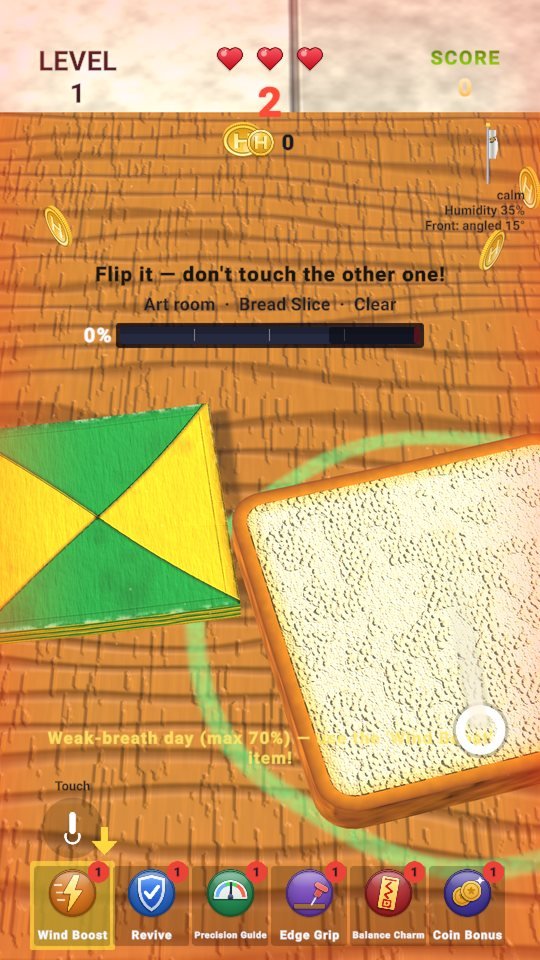


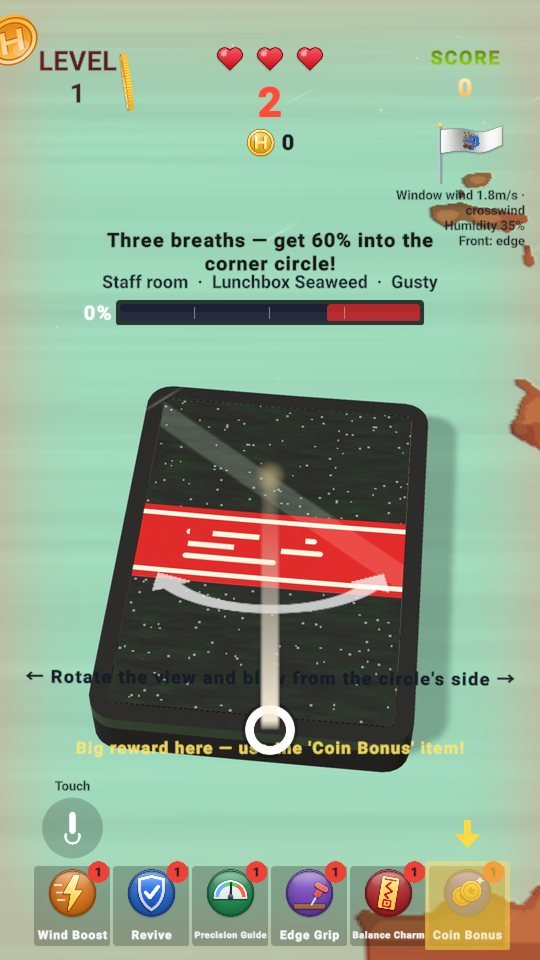

| Object | In-game tip |
|---|---|
| Sticky Notes | Sticky bottom, hard to slide — you can blow generously |
| Lunchbox Seaweed | A hollow tray, very light — too strong and it flies |
| Kitchen Sponge | Soft and grippy — push it up steadily |
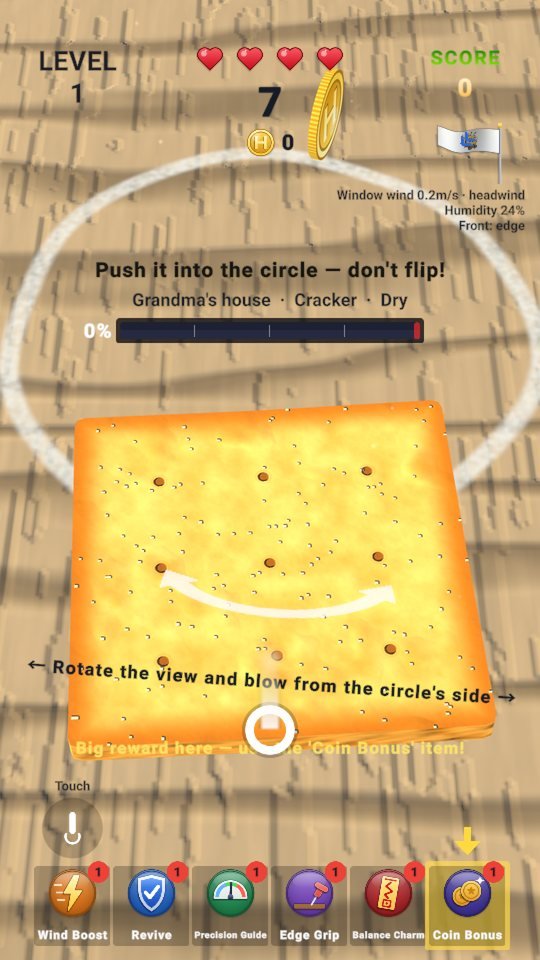
| Cracker | Small and crisp — a short, medium breath |
| Rice Cracker | A round rice cracker — it can take a fairly strong breath |
| Transit Card | Slick plastic slides easily — one strong breath |
| Hwatu Card | Long edge forward! From the short edge it flips back |
| 5 Playing Cards | Five cards are heavy — blow hard |
| Wooden Coaster | Solid wood is heavy — blow very hard |
| Bread Slice | The heaviest object — give it everything! |
Weather, desks and rooms
There are six kinds of weather — Clear, Breeze, Gusty, Humid, Dry and Gale — and they creep in from level 11 (full strength from level 40). Window wind adds to your breath: a tailwind makes it lift more easily, a headwind less. Humidity changes the ddakji’s weight, friction and curl (humid = heavier, dry = lighter and curlier). Read it on the flag at the top right (tailwind · headwind · crosswind · calm, Humidity). The game never gives a heavy ddakji a humid day, so no stage is unwinnable.


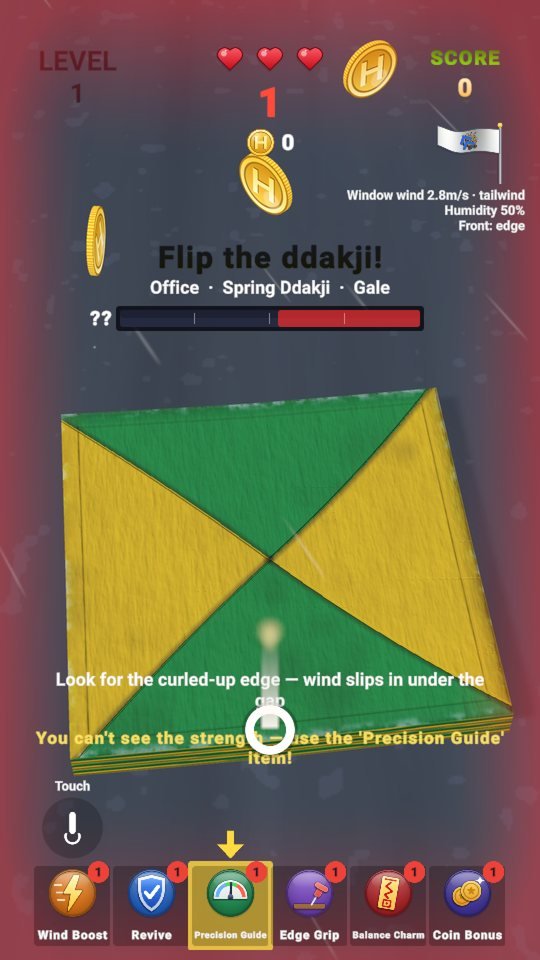
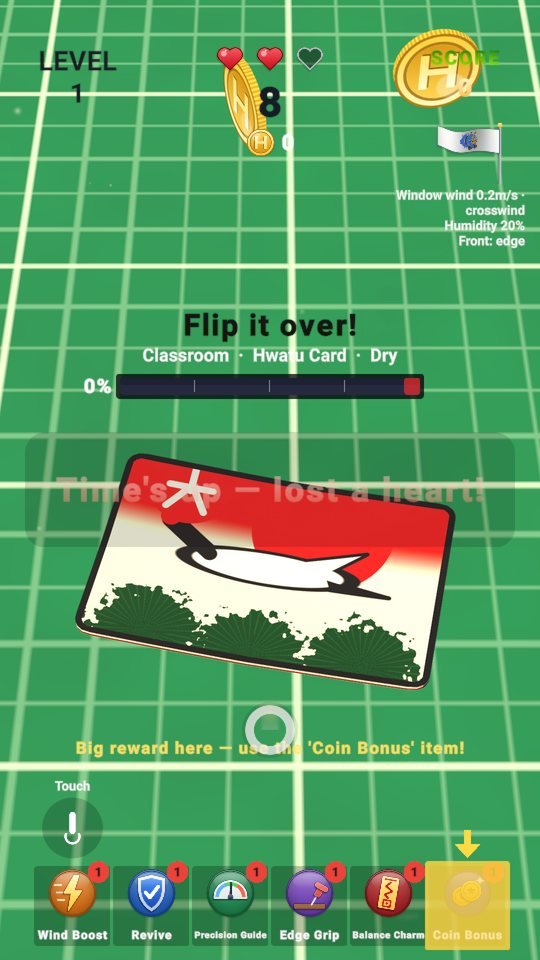
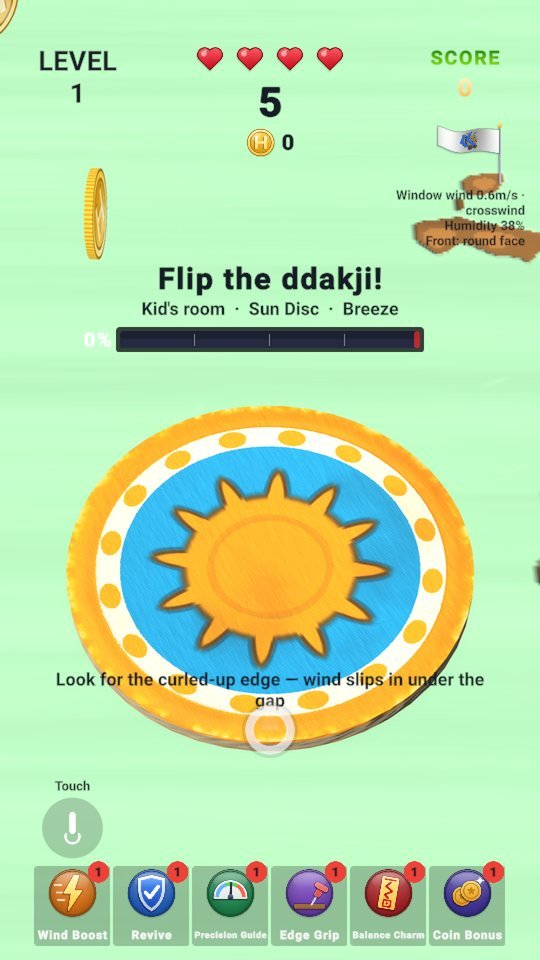
There are 24 desks (wood, felt, melamine, marble, slate, cork, bamboo, a cutting board …) and 24 rooms (classroom, library, kitchen, living room, café, workshop, hanok, convenience store, PC café, gym, music room …) that rotate from stage to stage. A slippery desk has low friction — length matters more than force.
Goal types — it’s not only flipping
Levels 1–10 are hand-tuned (controls → round disc → corner → newspaper → chalk circle → neighbor ddakji → chalk line), and from level 11 a mission AI builds each stage on the spot. Goal, desk, room, ddakji and weather get mixed, and the difficulty rises and falls to match your skill.

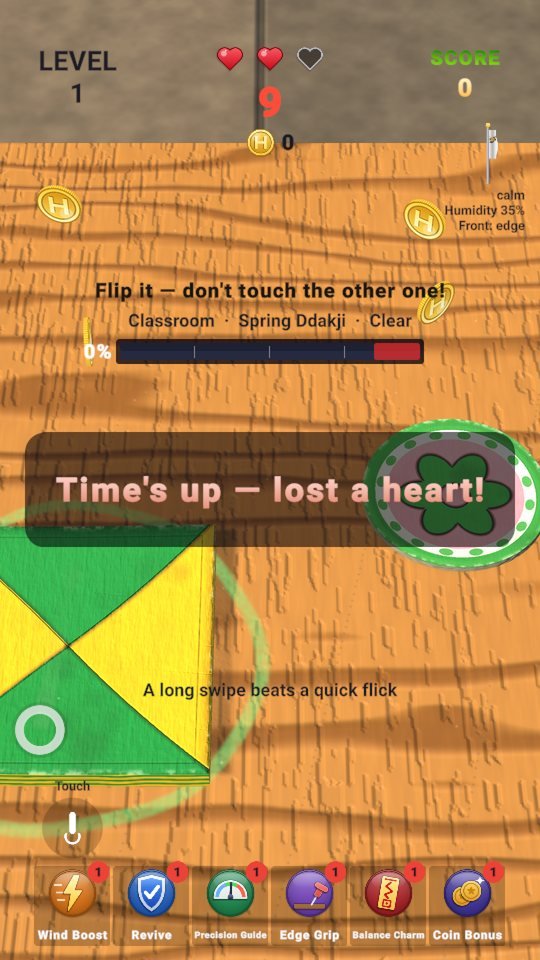
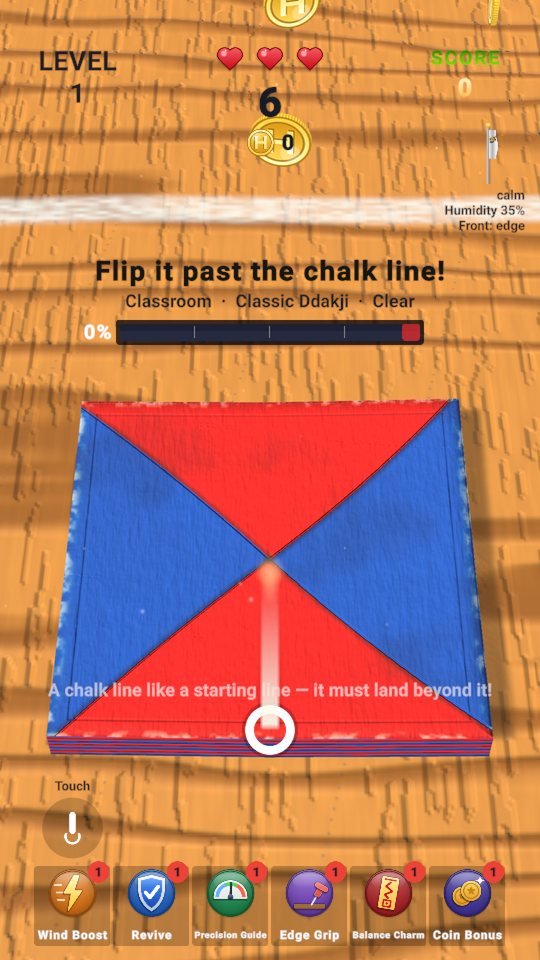
| Goal (in-game text) | The story |
|---|---|
| Flip it past the chalk line! | A chalk line like a starting line — it must land beyond it! |
| Flip it without crossing the line! | The desk border you drew with your deskmate — cross it and it’s theirs! |
| Flip it in the bullseye! | A target from art class — land it inside the small circle |
| Push it into the circle — don’t flip! | Nudge it like a paper boat into the harbor — flip and it sinks! |
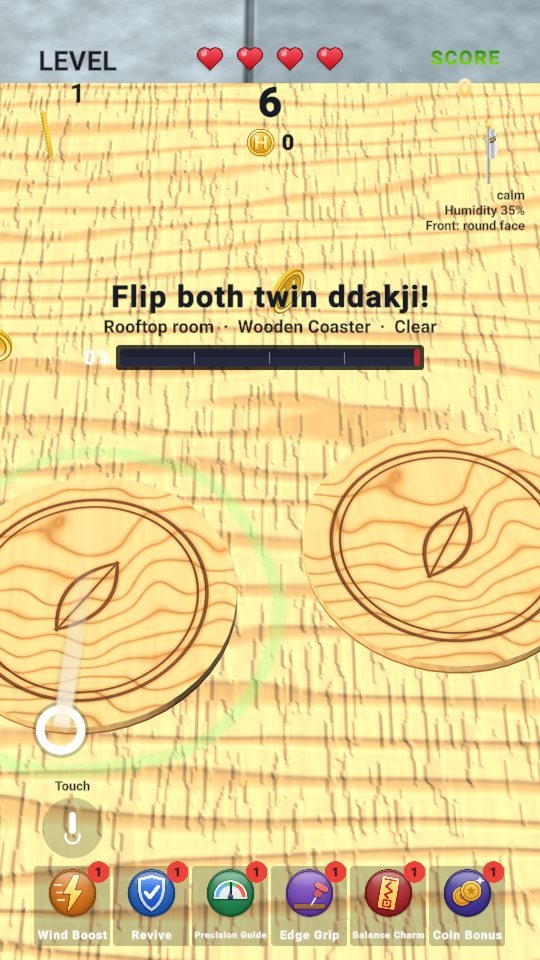
| Flip both twin ddakji! | Two identical ddakji — flip both to win |
| Flip it — don’t touch the pencil case! | Your deskmate’s pencil case — touch it and you’ll hear about it |
| Get it onto the notebook! | Hide it on the homework notebook where the teacher won’t look |
| Before the bell! Ns | Break time is almost over — before the bell! |
| Flip it in one breath! | The teacher allows just one try — one breath only |
| Ride the fan’s wind and flip! | The fan swings around — blow when the wind is at your back! |
| Blow the ddakji off the desk! | Your deskmate’s annoying ddakji — blow it off the desk! |
| Flip it against the headwind! | The window is wide open — wind from the front, and the view can’t turn |
There are also surround stages (flip without touching several neighbor ddakji), corner-circle stages (herd it into a corner circle in three breaths) and desk-jump stages (hop across a gap to the next desk). Read the goal line first — every stage means something different.

Help systems — guided stages, hints, help mode
When your breath starts, the game nudges the wind toward a strength that flips. If it still doesn’t flip, you lose no heart and the next try is corrected. From level 3 you’re on your own.
On your first two tries, each wait for a breath shows one line — like find the side that lifts. While you turn the view it reads wrong way → that way~ → almost → right there!
Lose the same stage twice and it turns on until you win — the view is turned to the best angle, the strength bar shows a golden band and an answer arrow, and a to-do line appears under the ddakji.
6 items and H coins
 Switching on Wind Boost explains what to do
Tap one of the six slots at the bottom: you use it if you own it, buy it and use it if you don’t, and if you’re short of coins an ad-recharge window opens. Items can only be switched on while you wait to blow. You start with one of each as a gift.
| Item | Price | Effect |
|---|---|---|
| Wind Boost | 60 | Your next breath is 25% stronger. One use. |
| Revive | 80 | Brings your ddakji back once if it falls off the desk. |
| Precision Guide | 40 | Shows the recommended strength on the gauge for one breath. |
| Edge Grip | 50 | For one breath, the desk edge holds your ddakji a little more firmly. |
| Balance Charm | 50 | For one breath, wild spinning is calmed so it’s less likely to flip back. |
| Coin Bonus | 30 | Win this stage and get 50% more coins. |
H coins come from clearing stages (a bonus on your first clear) and from collecting the coins on the desk. When you’re short you can use Watch an ad +60 coins (up to 5 times a day). A rewarded ad pays only if you watch it to the end. Some items have a condition while they’re on — for example Wind Boost wants a very hard breath (85%+). Meet it and that breath is set to a strength that reliably flips.

FAQ
① Turn the view so an edge faces you. ② Aim for the Good part of the bar. ③ Blow from the curled (lifted) side. ④ Heavier objects need more breath, lighter ones less.
You blew to the end of the gauge (Too much!). Round discs, newspaper and the seaweed tray are the usual victims.
Tap the mic button to allow permission again, or switch to Touch and sweep upward. Touch mode can take you all the way through the game.
After two losses help mode turns on and shows the right angle and strength.
Blow “phoo~” and flip the ddakji.
Play FlipMaster now
Playing it is much faster than reading about it.
Find the other Master Series games all in one place at hanilab.app.
More from this game
 FlipMaster Breath Class: A Four-Period Teacher and Student Script on How to Flip
 Where Do You Earn and Spend Coins? FlipMaster Coin Q&A in Five Questions
 FlipMaster First Game Diary: From the Home Screen to Level 1 Clear
 FlipMaster Blocker Countermeasures Meeting Minutes: Chalk Circle to Surrounded, 7 Agenda Items
🌌 Universe stories
 Roddy Universe, Part 2 — Fallen Down, Only One Step Back at the Roadside
 Roddy Universe, Part 1 — One Beat Before Crossing, the Empty Road Between the Cars
 Bombi Universe, Part 2 — Behind You: The Reaper That Walks Through Walls
Try other games
 FindMaster
 LottoMaster
 TakMaster